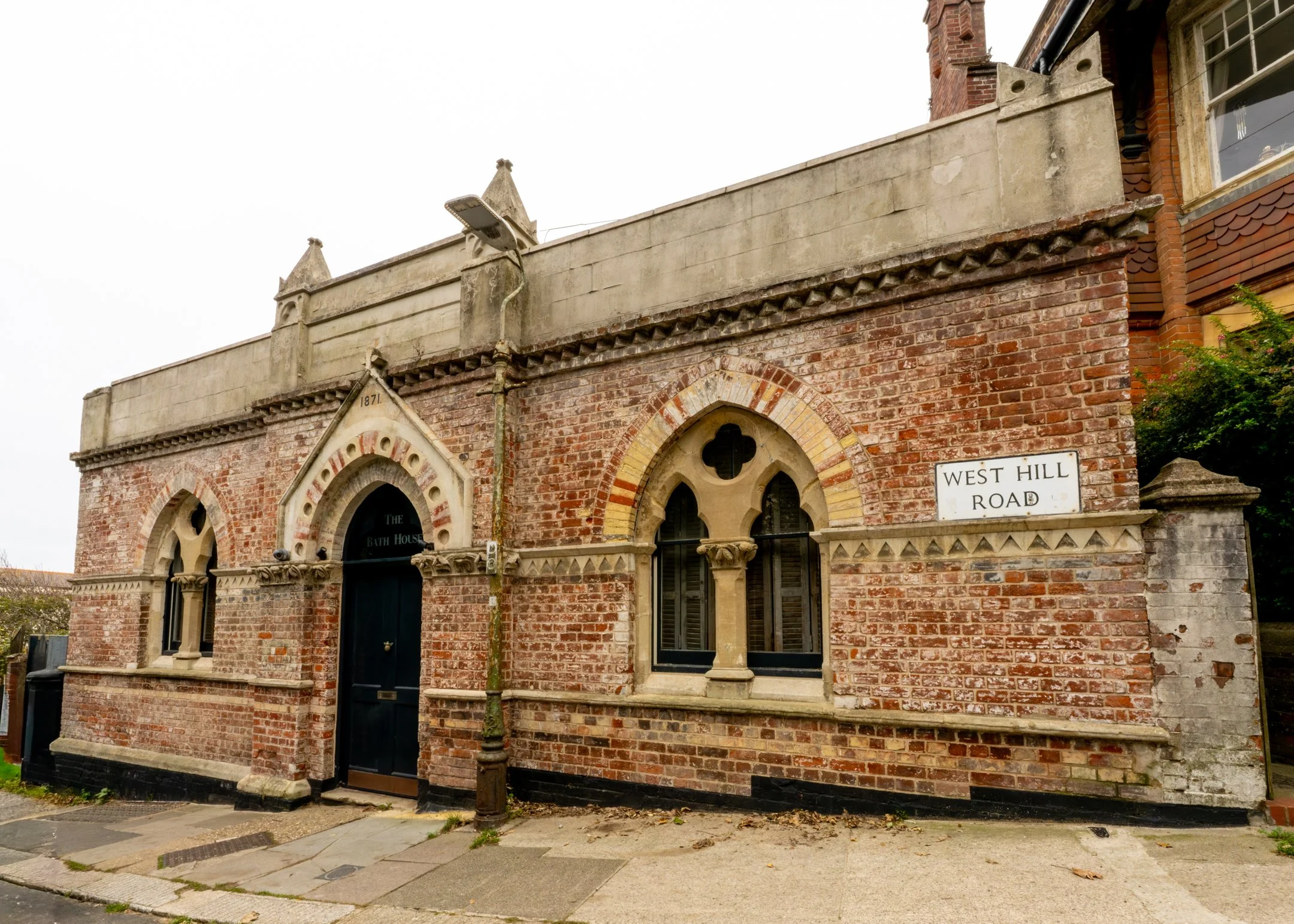
Two days in St Leonards-on-Sea is the right length of stay for a first-time visitor. Long enough to get past the seafront, short enough to force some shape onto the visit. St Leonards is the quieter, greyer, more galleried neighbour of Hastings: Regency-planned in the 1820s by the architect James Burton, grown through the Victorian period, worn down through the twentieth century, and revived over the last fifteen years by a steady influx of London refugees and long-standing locals who never left. This is a two-day itinerary written from the ground, by a property owner who lives on the front.
Day one: morning
Start with coffee at The Goatherd and the Fawn on Norman Road. Specialty roast, bakery case of good pastries, seats out the front if the weather is with you. The road is five minutes from the seafront and is the spine of independent St Leonards — galleries, design studios, a record shop, a homeware store, a few antique places.
After coffee, walk the length of Norman Road and cross under the railway onto the London Road side. Stop at Shear Design for prints and books. Hundreds of small titles; the owner curates it hard.
Walk back towards the sea via Kings Road. The streets here are Regency-planned and worth looking up for — decorative ironwork, hand-painted shop signs, a handful of newer murals on gable ends.
At the seafront, cross the promenade and take the underpass into Bottle Alley. This is Sir Sidney Little’s 1930s covered seafront walkway — the full length of the strip is tiled with the glass bases of tens of thousands of broken bottles, set into the back wall. It runs east towards Hastings.
Day one: lunch
For lunch, two options.
If you want something fast and on the front, Goat Ledge is the move. Beach-hut cafe, seafood wraps, local beers, sit outside regardless of weather. Nothing grand; it’s very good at what it is.
If you want something slower, walk ten minutes east to Half Man! Half Burger! on Marine Court. Cult-following burger joint; the vegetarian menu is stronger than most. Marine Court itself is a 1937 Modernist apartment block shaped like an ocean liner — worth noticing while you eat.
Day one: afternoon
Warrior Square Gardens sits five minutes inland from the seafront. A formal Regency park with a bandstand at the centre, stucco-fronted squares on three sides, a broad lawn running down towards the sea. An easy half-hour read-on-a-bench stop.
From the park, head towards Hastings via the seafront path. The walk takes thirty minutes at a slow pace and passes along under the cliffs, the 1960s seafront shelters, and Hastings Pier.
Hastings Pier is a proper architectural detour. The original 1872 pier burned down in 2010; the rebuild by dRMM won the 2017 Stirling Prize, and the current pier is a stripped-back wooden promenade rather than an amusement-hall pier. Walk to the end for the view back at the cliffs.
Cross into Hastings Old Town at the end of the pier. The Old Town has been a working fishing town since the early medieval period and is still mostly residential. High Street runs north through antique shops and small restaurants. George Street (parallel to it) has the restaurants and pubs.
Day one: dinner
Dinner in Hastings Old Town.
Webbe’s at Rock-a-Nore is the top-end option — a fish restaurant in the fishing quarter, linen tablecloths, same-day catch. Book in advance for weekends.
For something less formal, The Standard on the seafront west of the pier does well-executed British plates with a tight natural wine list. Chef-led.
After dinner, taxi back to St Leonards. A Hastings-to-St Leonards cab runs about eight pounds and takes five minutes.
Day two: morning
Breakfast at home — there is a good local butcher, a decent greengrocer and a dependable supermarket delivery window into the town.
After breakfast, pick one of two morning routes.
Route A — galleries. Hastings Contemporary sits on Rock-a-Nore near the fishing beach. A purpose-built contemporary gallery with rotating major exhibitions from British and international artists. Easy two-hour visit; cafe on-site.
Route B — cliffs. Drive (or taxi) east to Hastings Country Park, the six-hundred-acre clifftop reserve at the far end of Hastings. Sandstone cliffs, woodland paths, the Firehills section with views across the Channel. Two- to three-hour loop. Dog-friendly off lead in the deeper sections.
Either option wraps by early afternoon.
Day two: lunch
For route A: lunch at the Contemporary’s cafe, or walk up into the Old Town and eat at Webbe’s Rock-a-Nore again if dinner the night before was a hit.
For route B: on the way back into Hastings, stop at Rock-a-Nore fishmongers. Buy fish off the boat landing, take it back to the house, cook it for lunch — this is the best-value meal in the area by a distance.
Day two: afternoon
Three possible afternoons, pick one:
The Kino-Teatr. St Leonards’ independent cinema on Norman Road, in a restored Edwardian theatre. Arthouse, repertory, older classics. Check the schedule in advance — programming shifts daily. Bar and restaurant on site.
The De La Warr Pavilion at Bexhill. Fifteen minutes by train or drive. Mendelsohn and Chermayeff’s 1935 Modernist masterpiece — a white concrete pavilion right on the sea with rotating contemporary art exhibitions, live music, and a cafe on the top terrace. A three- to four-hour visit.
The beach, slowly. The pebble beach in front of St Leonards is flat on a calm day and warms up materially through summer. The best swimming is off the groyne between Warrior Square and Marine Court. Walk east to Hastings via the front, or west towards Bexhill via Azur beach.
Day two: dinner
Dinner back in St Leonards.
Farmyard on Norman Road is the single best dinner in town — chef-led natural wine bar with a changing menu of small plates written on the chalkboard. Book ahead.
St Clement’s on Mercatoria is the other strong St Leonards option — relaxed small-plates restaurant in a Victorian shopfront, strong on local fish.
If you want something quieter and traditional, The Horse & Groom on Mercatoria is a back-street pub with a short food menu and a friendly local crowd.
What you’ve missed
In forty-eight hours you will have skipped: the East Hill Cliff Railway in Hastings Old Town, the wider Hastings Contemporary programme, Camber Sands thirty minutes east, Battle Abbey another half-hour north, and the walk west along the coastal path towards Bexhill. Two days is enough to get a feel; three or four days is enough to start knowing the place.
Visitor FAQ
Common questions, answered.
Is St Leonards-on-Sea worth visiting?
Yes — for galleries, independent restaurants, Regency architecture, and the sea. St Leonards has a much quieter pace than Hastings and more of the creative scene. Two days is a reasonable introduction; anyone who likes a coastal town with independent character will find plenty to return for.
What's the best way to get to St Leonards from London?
Direct train from London Charing Cross to Warrior Square station takes about an hour and forty minutes. The station is ten minutes' walk from most of the seafront accommodation. By car, expect two hours via the A21 — traffic at the Tunbridge Wells end is the main variable.
Is the beach good for swimming?
The pebble beach in front of St Leonards is good for calm-day swims through the warmer months. The seabed is stone, not sand, so water shoes help. Tides run fast; check tide times before swimming at the edges of the day. Camber Sands, thirty minutes east, is the nearest wide sandy beach for families.
Where should we stay for a long weekend?
For a group stay of up to eleven guests, The Bath House is a Grade II listed Victorian bath house three minutes from the seafront with a bowling lane, cinema room, sun terrace and 14-seat feasting table. For smaller groups, Hastings and St Leonards have a range of independent accommodation from small boutique hotels to sea-view apartments.
Stay at The Bath House
Base a St Leonards weekend here.
Read the full stay page, explore the neighbourhood guide, or walk through the spaces.
Check availability